
Five ways to cut oil use in Ontario
Image via Wikipedia Toronto – In 20 years, Ontario drivers could be using 25 per cent less fuel than today, … Continue reading Five ways to cut oil use in Ontario
Image via Wikipedia Toronto – In 20 years, Ontario drivers could be using 25 per cent less fuel than today, … Continue reading Five ways to cut oil use in Ontario
Ottawa – Proposed federal regulations to cut emissions from cars and trucks may have little or no effect, according to … Continue reading Canada’s greenhouse gas regulations may have little or no effect
Image via Wikipedia Strathroy, Ontario – TD Bank Financial Group (TD), in partnership with Tree Canada and the Munsee-Delaware Nation, … Continue reading New carbon forest takes root in Ontario
Ottawa – Sierra Club Canada condemns the federal government for inaction on climate change. In a report tabled Tuesday June … Continue reading Sierra Club Canada condemns government inaction on climate
Negotiating the Climate Change Web: A Community Vision is an innovative gathering, bringing together Nova Scotian stakeholders – including government, NGOs and the public – to discuss the interrelationships between trade, environment, society and climate change. Continue reading Negotiating the Climate Change Web: A Community Vision

 Climate Wars
Gwynne Dyer
Toronto: Random House, Canada, 2008, 288 pages.
Global Warring
Cleo Paskal
Toronto: Key Porter Books, 2009, 288 pages.
Here’s a fact I had never considered: the word “rival” comes from the Latin word rivalis, meaning “those who draw water from the same source.” Rivalry is closely related to the availability of shared resources, and tensions are easily triggered when food and water are at stake.
Now, let’s take this to the extreme: climate change projections suggest that the flow of many of the world’s major rivers will be seriously  reduced as glaciers retreat. The scale of potential conflict is staggering. The Himalayan watershed alone, which includes the Ganges, Indus, Yangtze and Mekong
  Rivers, supplies water to almost half the people on this planet, including nuclear powers China, India and Pakistan.
But this is about more than rivers. Two new books on the issue, Climate Wars and Global Warring, introduce a bevy of reasons for concern: natural disasters, disappearing low-lying island states, shifting coasts and access to oceanic exploitation zones, the melting Northwest Passage, desertification and altered patterns of food production. Each has the potential to redefine how we interpret and conceptualize international law, how we interact diplomatically with other nations, and how and why we engage militarily.
Cleo Paskal, a fellow at Chatham House who boasts journalistic stints at The Economist and the Chicago Tribune, seeks to “introduce and legitimize the idea that environmental change is about to have enormous, and specific, geopolitical consequences.”…[Click here to read more!] Continue reading Climate Wars + Global Warring
Norway – Dr. James Hansen, one of the world’s foremost climate scientists, has thrown his support behind a Greenpeace and … Continue reading Leading climate scientist urges Norway to pull out of tar sands
Calgary – Greenpeace activists are “celebrating” outside Statoil headquarters in Calgary this morning in honour of Norwegian National Day, and … Continue reading Greenpeace marks Norwegian National Day at Statoil headquarters
Greenpeace today released a new report on exports of tar sands oil to the United Kingdom and Europe as part … Continue reading Greenpeace Report: Tar Sands in Your Tank
The Government of Alberta yesterday made false claims about greenhouse gas emissions from the province’s major industrial polluters. The claims … Continue reading False Alberta Government claims highlight inadequate emissions regulations
With all eyes on U.S. energy and climate policy, Pembina introduces Director of U.S. Policy WASHINGTON, D.C. -With the Canadian … Continue reading Pembina Institute Opens Washington Bureau
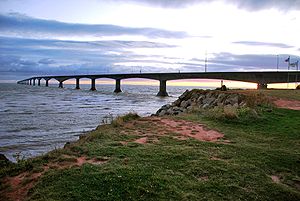
An $8.2-million adaptation program will help Canadians in the Atlantic provinces deal with the impacts of climate change on coastal erosion, flooding and ground water resources. Led by the Government of Canada and the governments of the four Atlantic provinces, the three-year Regional Adaptation Collaborative program is part of the federal government’s investment to help Canadians adapt to climate change. Continue reading Governments Work Together to Address Climate Change